
Why Autumn Is Ideal for Tree Pollarding
Tree pollarding is a specialist pruning technique used to control a tree’s size, encourage managed regrowth and reduce the risk posed by heavy or overextended branches. Timing plays an important role in achieving the best results. For many suitable deciduous species, autumn tree pollarding can be an effective option, particularly once the leaves have fallen and the tree is entering dormancy.
What Is Tree Pollarding?
Pollarding involves removing the upper branches of a young tree to establish a framework from which new shoots can grow. These shoots are then cut back at regular intervals to maintain the tree’s shape and size. Commonly pollarded trees include lime, willow, plane and some varieties of maple.
This method is often used where trees grow close to buildings, roads, boundaries or overhead services. However, pollarding is not suitable for every tree. It should not be confused with topping, which involves making indiscriminate cuts that can leave a tree structurally weak and vulnerable to decay.
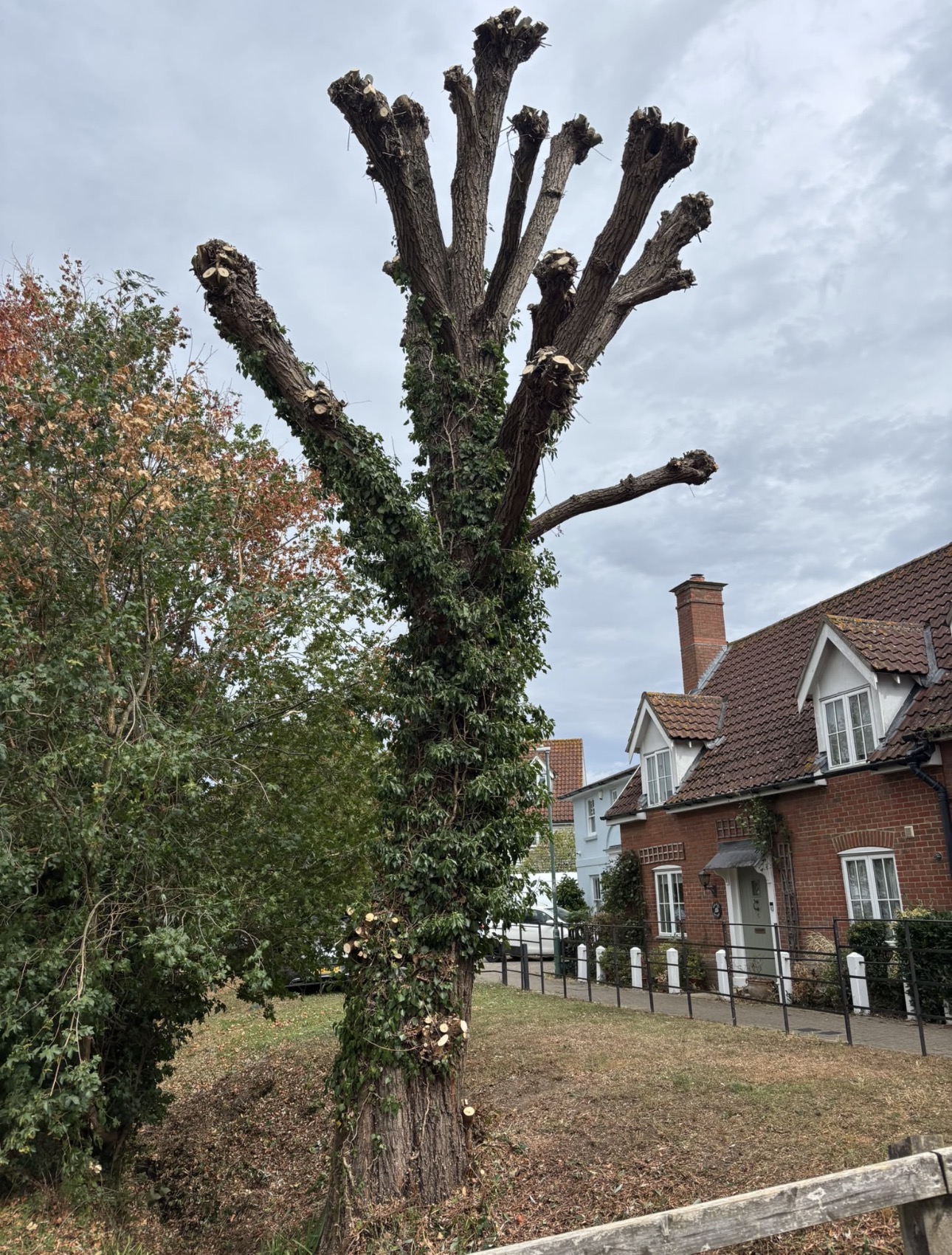
Why Is Autumn a Good Time for Pollarding?
During autumn, many deciduous trees begin moving into their dormant period. Growth slows, leaves fall and the tree’s energy reserves are stored within its roots and woody tissues. Pruning at this stage can place less immediate pressure on the tree than cutting during active spring growth.
Leaf fall also gives a professional tree surgeon a clearer view of the branch structure. This makes it easier to identify previous pollarding points, weak limbs, crossing branches and areas of poor growth. Better visibility supports more accurate cuts and helps preserve a balanced framework.
Autumn tree maintenance may also reduce disruption to nesting birds compared with spring and early summer. Even so, every tree must be checked before work begins, as active nests are legally protected in the UK regardless of the season.
Benefits for Safety and Tree Management
Regular pollarding can help keep suitable trees at a manageable height and prevent branches from becoming excessively long or heavy. This may be especially useful in gardens, communal spaces and commercial grounds where falling limbs could damage property or create a public safety concern.
For example, a mature lime tree beside a driveway may produce dense annual growth that blocks light or extends over parked vehicles. Returning it to established pollard points during the appropriate seasonal window can create a more compact canopy while encouraging controlled regrowth.
Pollarding may also help property owners plan ongoing tree care. Once a correct cycle has been established, future pruning can often be scheduled consistently, reducing the likelihood of neglected branches becoming oversized.
Practical Advice Before Pollarding
Avoid attempting large-scale pollarding without professional guidance. Poorly positioned cuts can expose the tree to disease, decay and structural failure. The ideal timing can also vary according to the species, age, condition and location of the tree. Some trees may be better pruned in late winter, while others can respond badly to heavy cutting.
Before arranging work, check whether the tree is protected by a Tree Preservation Order or located within a conservation area. Permission from the local planning authority may be required.
A qualified tree surgeon can assess whether pollarding is appropriate, choose the safest pruning schedule and carry out the work correctly. With careful planning, autumn can provide an excellent opportunity to improve tree safety, manage future growth and support the long-term care of suitable trees.
For further advice on this or any other garden related query, please contact us today.

Written by
Paul ThomasLET'S DISCUSS YOUR TREE CARE NEEDS